Cuba Caribe Festival of Dance & Music April 8-19, 2006

Directors: Ramón Ramos Alayo, Jamaica Itule Simmons
Dance Companies: Aguacero and the Enraizar Crew, Alafia Dance Ensemble, Juntos, Los Lupeños de San Jose, Alayo Dance Company, Arenas Dance Company, Cunamacué
Enraizer
By Kristen Cosby
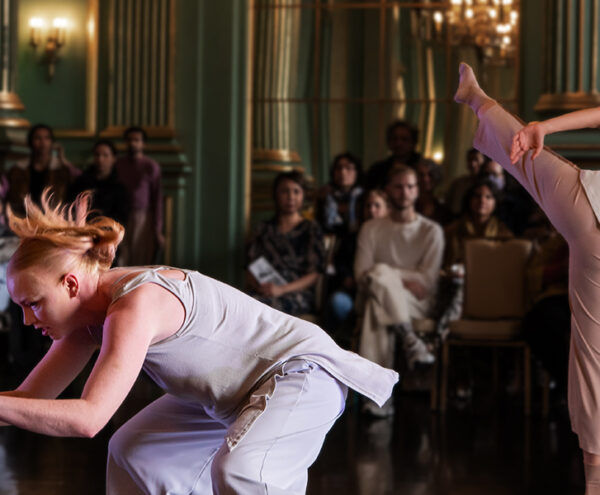
Since its inception in 2005, the CubaCaribe Festival of Dance & Music has elevated Caribbean and Latinx cultures and told narratives of the Caribbean diaspora through dance, music, visual art and spoken word. The 20th CubaCaribe Festival of Dance & Music delivered eleven days of programming across San Francisco and Berkeley, the highlights of which were two weekends of dance performances at ODC and the Bayview Opera House in San Francisco.

The opening weekend of this year’s festival featured a mixed program of six dance pieces by Alafia Dance Ensemble, Juntos, Los Lupeños de San Jose, Alayo Dance Company, Arenas Dance Company, and Cunamacué – exhibiting a range of Afro-Caribbean and Latin American dance forms, from Haitian Vodou, Afrikete, Dazon, Sones Mestizos, to fusions of Afro-Cuban modern and folkloric dances.
On the penultimate day of the festival, the Bayview Opera House filled for Enraizando/Rooting Within, an evening-length, commissioned work choreographed, composed, directed and danced by Shefali Shah and her company Aguacero and the Enraizar Crew as part of the Enraizar Project. This was Shah’s first commissioned work for the festival.
Blending Puerto Rican bomba with contemporary dance and spoken word poetry, Enraizando/Rooting Within explored themes of girlhood, womanhood, and transformation, making use of projected, historic and modern imagery of Puerto Rico, its people and elements, and the dancers to celebrate intergenerational connection and continuity.
The opening invocation was performed in Spanish by Yairamaren Maldonado, who asked the question: “What does it mean to go out on your own? To go alone? To be independent? And, really, are you ever truly alone?” Shah’s dancers and mentees had spent weeks in collaboration attempting to answer these questions. The resulting six short works choreographed by Shah and other members of the company, each with several solos, created the framework for the performance.

A group of nine singers and five drummers accompanied the seven member, all-female ensemble on the small stage. With singers and dancers often swapping rolls and a father-daughter duo performing poetry together on stage, the performance felt simultaneously relaxed, highly technical and energy-driven, as if we’d suddenly been transported to a community gathering in Puerto Rico.
Dancer, singer, and choreographer Liris Robles created several solo moments in the show. Using her bright blue floor-length skirt to whip the drummers into a frenzy, she hammered the floor with staccato steps, sweeping her skirts wide like butterfly wings and then falling back on the group of dancers behind her, who then raised her back up. In another dramatic move, that she later referred to as “rising from the ashes,” Liris dropped to the floor in a crouch with her skirts spread all around her and slowly rose and led the drums again.
While several of the pieces were blended with modern dance and performed as an ensemble in which the dancers alternated between softer swaying motions of skirt and limb, the company also made use of the bomba tradition of defiant and fiery solos. Bomba emerged as a resistance on the sugarcane plantations during colonial slavery, but its ferocity can invoke excitement and rebellious hollers from a crowd in Bayview on a Saturday night, especially in moments when Shah’s dancers shifted from the soft swaying hip movements that induced that feeling of ocean breezes and warm nights to the sharp motions of fighting, with elbows jutting out like chicken wings, and limbs jabbing and skirts waved like battle flags, and the drums echoing a reply.

“The entire project of Enraizar was incredibly special and unique,” said Robles after the show, “[My] piece La Corona Tiene Sombra was inspired by the song Shefali [Shah] wrote called Saliste Sola, the song featured in the piece. It speaks to the challenging, yet empowering journey of stepping out into the world to become who you are, undefined by anyone else. It is a topic I feel deeply connected to as I navigate my 21st trip around the sun. Becoming an adult, creating my community, carving out my career path, and really beginning to define myself in the world.”
For a company whose mission, in Shah’s own words, is to empower young women of color to tell stories of identity, transition, and belonging through bomba, they succeeded.


Comments